Thursday, September 15, 2011

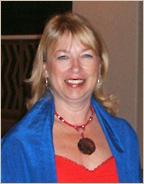
Cecilia Katunga of Kenya


In August I went to Kenya to do a three-day communications training. Of course I used that opportunity to buy exciting new items for Up from the Dust. I also made my first trip to Rwanda and bought items from there as well.

But there was one meeting that caused me to break into sobs--sobs of happiness.

I was hosted by Cecilia Katunga at her new home. If you remember, Cecilia's home in the Mukuru Fuatanyayo slum of Nairobi was burned in March of this year. I asked you, my friends, on this list if you could spare $20-$50 to help Cecilia. We sent a total of $750 to Cecilia and that was enough money for her to get out of the slums, and rent a new room.

Actually her new home is two rooms. Orphaned at 13, Cecilia, age 25, still supports a brother and sister who live with her.

Cecilia was so excited to greet us. (My friends Eva and Joe went with me. Eva helped support Cecilia in setting up her knitting business about four years ago). Cecilia was dressed up and couldn't get the smile off her face. She served us tea and buttered bread. They had been on a blackout all day but she was still cheery. (Would we be after a day without electricity?) When Eva said grace before we enjoyed our tea and bread, I just started sobbing. What does $20 mean to us? $50? So little--yet by 10-20 people sending in small amounts of money, Cecilia now has a new life.

I was overwhelmed by how happy she was and what a difference we made in her life. She told Eva, "When I heard from Mary Schnack that she was wiring the money, I was no longer a fire victim."

I bought more scarves from Cecilia (red, black, brown, maroon, white, peach, light green) and two darling baby outfits--one pink and one blue. She has also moved her knitting machines out of Kenyatta Market into her home. Please go online and support her business by buying her products!

Cecilia is so thrilled with her new home, the extra space, the sense of community around her and she said it is a much safer place to live.

Monday, September 12, 2011

I Finally Went to Rwanda

My first trip to Africa was in May, 1994, when a humanitarian aid group, ADRA, sent me to Nairobi to lead their communications efforts during the Rwanda genocide.

We worked out of Nairobi, Kenya, because that’s where the press was centered. We also went to a refugee camp in Burundi, which neighbors Rwanda.

I was in Africa for three weeks and I left before the war was over. When it ended, I had an incredible ache to return to East Africa and go to Rwanda.

Africa had kept a piece of my heart and my life changed forever with that trip.

I have made seven or eight trips to Africa since then, to Ghana, South Africa, Swaziland and many more trips to Nairobi, but I never made it to Rwanda.

I read everything on Rwanda. I watch all the movies and TV shows. I volunteer to do training and mentoring through the Peace Through Business program (www.ieew.org), which works with women entrepreneurs from Rwanda and Afghanistan.

Finally, I was able to close the loop and went to Rwanda. It was only a two-day trip, but having the opportunity to go, I had to grab at the chance even though it was far too short.

Called the land of 1,000 hills, the capital city of Kigali is beautiful with so many parks and open, green areas, and most houses and buildings built on the side of hills (giving almost everyone gorgeous views).

I met the three women I have been involved with mentoring through Peace Through Business. Deborah Kakoma has a brand strategy business, Chantal Zirim is working on opening a juice bar and Honorine Mugorewase has a hotel/apartment building which I was able to see and tour.

I also met Chantal’s and Honorine’s families which was such a treat. Deborah took me to the new Film Institute and to a poetry slam. As someone said, I am living my bucket list!

I also spoke to a gathering of about 30 Peace Through Business graduates. Many of the women I have met before and call friends, as I have done training for the program the past four years. Their enthusiasm for business, soaking up new ideas and experiencing the new concept of networking is inspirational and one of the things that keeps me going through difficult times.

Deborah introduced me to Rose Kabuye. When commenting on all the greenbelts and parks in Kigali, she said, “Thank you. I like to think I had something to do with that.” Rose, who had been just another woman business owner that I enjoyed meeting and talking to at lunch, was now larger than life.

She told me some of her background, which I have augmented with her Wikipedia entry. She is a retired Lieutenant Colonel in the Rwandan Army and remains the highest ranking woman ever to serve in her country's armed forces. She is currently working in the private sector as Chief Executive Officer of Virunga Logistics and Startech Limited but is best known for her work as a freedom fighter in the liberation of Rwanda from 1990 through 1993. She subsequently became Mayor of Kigali City, Rwandan Chief of State Protocol, and a member of the Rwandan parliament. Because of her participation in the liberation struggle, she was awarded The Rwandan National Liberation Medal and the Campaign Against Genocide Medal.

Now as a board member on the Rwanda women entrepreneurs group, she hopes to encourage women to get involved politically at their local community levels.

I could have talked to her all day. Be sure to Google her and look at the Wikipedia entry on her. I have only told a small, small part of her story.

I also bought more items for Up from the Dust from another Peace Through Business graduate, Allen Joy Mbabazi (more in another upcoming blog). Saudah Nalule treated me at her Spa and Salon to the most incredible facial I have ever had and Immy Kamarade sent me home with fresh roasted coffee from her business. Immy was recently named the President of Rwanda’s women’s chamber of commerce.

Chantal showed me the real “Hotel Rwanda.” Honorine took me to the Kigali Genocide Memorial. Besides many mass graves, there is an outstanding exhibition, which goes through the history of Rwanda and what led up to the genocide. It is a powerful presentation and should be seen by all.

I did not realize at the time that Honorine lost her parents and family in the genocide and spent three months in a refugee camp in Burundi. It must have been difficult for her to be there with me. Afterwards, I got to meet three of her four children, her husband and see her new business. She is a great example of how Rwanda has worked towards recovery (I think recovered is still too strong of a word) in a short 17 years since the genocide.

My main thought after going to the Memorial is how embarrassed the international community must be at letting this genocide happen. It could have been stopped. At the least, it should not have lasted as long as it did.

The Memorial also details other genocides. The world said it would learn after World War II and the genocide of the Jews at the hands of Hitler. But it is clear that we did not.

And now it is clear how much we have to learn from Rwanda.

Wednesday, August 10, 2011

How Many Other People Can Recite Your Elevator Pitch?

I used to own a sign and banner shop in Marina del Rey, California. It is the first business I started as an entrepreneur. I set up shop in the same geographic area as the hospitals where I had worked. Since Community Relations reported to me at the hospitals, I had been active in the Chambers of Commerce and a lot of other local groups.

My #1 form of marketing was networking. Besides the Chambers (I think I joined five), the police auxiliary board, morning breakfast meetings such as LeTip, and the American Cancer Society, I also targeted women’s business groups.

My “elevator pitch” was “A business with no sign is a sign of no business.” Catchy, memorable and a good call to action. (See Rhonda Abrams story about Signs, the tried and true in marketing business).

In fact, when I would stand up to introduce myself, after just a couple of weeks, those present would say my tag line for me. My phone number was the same forwards and backwards and something I made note of when I said it, so that made everyone remember my specific phone number as well.

I had equal success with clients. When Broadway Gymnastic School reinvigorated their branding, we added the tag line “Helping Children Grow Since 1979”. This says that they do more than gymnastics,--they care about children overall, and are not a new start-up gym but a long time community member. They were able to use this phrase effectively--and immediately--when their gym burned down and the media and concerned community members and parents were at their doorstep.

After attending one of my communication seminars, Gone Rural from Swaziland, Africa, added a tag line : Gone Rural designs and produces uniquely beautiful home accessories handmade by 700 rural Swazi women. The only part of the story that tag line doesn’t tell is that Swaziland has the highest rate of HIV infection in the world—and many of those women are raising their grandchildren.

As Runa Magnusdottir and I teach in our BRANDit workshop (www.brandit.is), whether you are trying to raise capital, promote your company, or promote yourself, it‘s essential to have an elevator pitch. You have less than a minute to explain yourself, your business, your goals, and your passions. Your audience knows none of these. Are you prepared? Can you present your vision smoothly, enticing them to want to know more?

1. WHO

DESCRIBE WHO YOU ARE: Keep it short.
HINT: What would you most want the listener to remember about you?

2. WHAT

DESCRIBE WHAT YOU DO: Here is where you state your value phrased as key results or impact. To organize your thoughts, it may help to think of this as your tag line.
HINT: this should allow the listener to understand how you or your company would add value.

3. WHY

DESCRIBE WHY YOU ARE UNIQUE: Now it‘s time to show the unique benefits that you and/or your company bring to business.
HINT: Show what you do that is different or better than others.

4. GOAL

DESCRIBE YOUR GOAL: Describe your immediate goals or intentions. Look at your markers from Your BRAND Your Passion worksheets. Include a time frame.
HINT: This is the final step and it should be readily apparent to the listener what you are asking of him / her.

5. CREATE ONE SENTENCE OUT OF THE PRIOR FOUR

These guidelines help you communicate your main message quickly, clearly, and distinctly to someone who doesn‘t even know you. A good pitch takes planning and practice to deliver quickly and to make it memorable.

Thursday, July 14, 2011

PR WORKS: Know your Strengths …..And Weaknesses

When creating a communications plan or branding statement, one of the most important things to come up with is: “How are you unique?” It’s a question that a lot of business owners feel challenged in answering, but it’s the key to making them stand out from the crowd.

Now I want to take that idea one step further: As important as it is to understand your strengths, it is even more critical to know your skeletons, or areas of vulnerability. Understand these skeletons and work to correct them, but also be prepared to communicate about them.

How well do you really know and understand your organization…it’s structure, the mission statement, the history, past, present and future challenges. Who are you? Why do you exist? Who is your customer? By answering these questions, you’ll find your businesses strengths….and weaknesses.

For example, in the mid-1800s, a group of Adventists set a date for the end of the world. Although the mainstream Seventh-day Adventist Church has never sanctioned date-setting, it is an irrefutable reputation of the church. One cannot just respond to a question on date-setting with a denial. There must be a brief, sensible explanation on how it happened in the first place and why it no longer happens now. (I counseled them on this during the Waco Cult standoff in 1993.)

Besides understanding our own strengths and weaknesses, it is imperative to know what is going on in our community, our industry, with small businesses, and overall--our world. What are challenges that others are facing? You may not be immune to those same challenges for long. What is happening in your specific community? In the business and political worlds in which we operate? It is important to have a grasp on the world around us to put our own strengths and weaknesses into perspective.

When I owned a sign shop in the mid-90s, we used vinyl to make the lettering on our signs and banners. It was a big step forward from the toxic paints that had been used in the past. At the same time, I was aware that there was a lot of publicity around the fact that disposable diapers, such as Pampers and Huggies, did not break down in landfills and there was a push to go back to cloth diapers for the environment.

So what do diapers in a landfill have to do with a sign shop?

I investigated the vinyl we used for our signs and found out they would take far longer than diapers to break down. If diapers had become a major story, what about all of these new vinyl sign shops that were opening across the country? Fortunately, this never came to the media’s attention, but I knew it was an area of vulnerability if it did break, and I was prepared with answers.

Access where you are vulnerable. Seek out the vulnerable areas within your area where you can prevent a crisis and immediately begin to correct the problem.

With the advent of social media, we are even more vulnerable as word spreads virally much more quickly.

This is where a crisis communications plan is helpful. You note a problem, anticipate what type of crisis may occur even after taking precautions, and then label a set of steps to take place to handle the situation and communicate during the crisis. Have your message points ready and include plans for social media. It’s far better to do this in advance than in a reactive mode.

Wednesday, June 1, 2011

How Events Around the Globe Can Affect Your Business

Here’s my second blog post on It's Your Biz, powered by SBTV.com.

I never expected the earthquake and tsunami in Japan to affect my business. Too far away from my U.S. offices.

I never expected the tornado and its devastation in Joplin, MO, to affect my business. Too far away from my offices in Washington DC and Arizona.

I never expected a volcano going off in Iceland to affect my business. Yes, I go to Iceland once or twice a year to give seminars. But the timing would have to be oh so precise....

Well, all three events DID affect my business. And in vastly different ways.

1) My client, Acura of Glendale (CA), had to suspend public relations (fortunately, only for two months) when they weren't getting any new cars or financing deals to promote. Why? Most Acuras that are sold in the U.S. are actually made in the U.S. But there are some little parts that are made in Japan. And without those parts...there are no new cars.

2) Life Cube Inc. started talking to us about doing their social media work about a month ago. Life Cube is a quickly deployable, portable shelter that can be enormously helpful in providing life-saving shelter and supporting on-the-ground operations by aid workers.

But the day after the Joplin, MO, tornado, Life Cube called us and said-start now! Here's the signed agreement and the check is in the mail (and it really was). We dropped everything and immediately set up their social media accounts, started Tweeting and obtaining significant "follows" for their accounts.

3) I was scheduled to go to Iceland to speak for the European Women Inventors & Innovators Network International Conference. But on May 21, three days before my trip, the Grimsvotn volcano started erupting and the Keflavik Airport outside of Reykjavik was closed. The conference, expecting more than 300 attendees from throughout Europe, was postponed until September.

So what's the lesson in all of this?
- Be aware of what is happening in the news-for yourself and for your clients. How can you localize and personalize a story for a client? The media loves local interest stories. How can you use this to make your social media more relevant and timely-a vital part of attracting attention on social media.

- I found out my ACURA client was "back in business" with new financing deals by calling her. She had not had time to call me and gear her PR back up. So stay in touch (without being annoying) and be there to help.

- After a day or two, I got in touch with the Icelandic conference organizers and offered to share my speech presentation and hand-outs with the people who WERE going to attend. I slightly changed the presentation, which was on Building a Brand on a Sustainable Business. I used it as an education/To Do piece that, now they had over three months to build their brand on sustainability, what steps they could take so it would be strong and powerful by the rescheduled date in September.

Yes, indeed, it's summer and the perfect season to make lemonade out of lemons!

Read the full blog.

Targeting the RIGHT Audience for Outreach

I have a new blog on It's Your Biz, powered by SBTV.com.

A good thing about the Oprah show being over, to a publicist, is we have always heard from clients "I want to be on Oprah."

Well, that was easier said than done. Yes, there would be great benefit to many clients to be on Oprah. But it wasn't always the best way to spend your money, to have your PR firm spend an inordinate amount of time trying to make this happen!

I remember when I had a client of nurse-owned home health care agencies across the state of California. They wanted to be on Oprah (that's a given) and CBS, and written up in USA Today, and Time Magazine. (I'm not sure how they came up with that list.)

But when we scheduled a half-day meeting to brainstorm a Communications Plan, we took a hard look at their TARGET audience. Their primary audience was case managers at hospitals, people who would recommend an agency when someone was discharged from the hospital and needed home health care services.

Knowing your target audience is so vital. Do hospital case managers watch Oprah? Maybe. Do they read USA Today and Time Magazine? Maybe.

But we know they read the stories in the industry publications geared towards nurses and case managers.

It may not be as exciting at the dinner table to say to your family, "I was featured in Case Manager Today magazine this month" as it is to say "I was quoted in USA Today." But it will be more effective to grow your business! And it's probably just as much fun at the dinner table to say "I got five new clients today" - even though you weren't even on Oprah.

So the basic lessons here are:
1. Develop a Communications Plan, which will include your target audiences.

2. Decide the best way to reach those audiences.

3. When you do get media coverage, leverage it through reproduction, social media, posting on websites, etc., so it has a LONG shelf life.

Read the full blog.

Monday, March 21, 2011

Ingenuity in Iceland

What do you do when the U.S. leaves a base with all its buildings? This happened in Iceland when the U.S. Military left the area after being there for 60 years. The area soon had staggering numbers of unemployment and foreclosures and threatened to turn into a ghost town.

But ingenuity is something Icelanders are never lacking. A new company, Keflavik Airport Development Company (Kadeco) was founded with the goal of putting the defense area and its facilities to civilian use. Kadeco is wholly owned by the Prime Ministry of Iceland.

The goal and purpose of Kadeco is to lead the development and transformation of the former defense area for civilian use. Part of that process is necessary preparation work, assessment of the area and facilities as well as assessment of development- and growth opportunities in cooperation with invested parties.

Keilir Atlantic Center of Excellence was founded in the spring of 2007 and the name symbolizes Iceland’s position in the globalized world; with the goals of the institute being to build up knowledge, teaching and research at a university level within the international academic community. Keilir’s main international focus is on two schools: School of Energy and Technology and an Aviation Academy.

Of course, the one that caught my eye is the Ásbrú Incubator at Ásbrú Enterprise Park which offers support and facilities for entrepreneurs, start-ups, early-growth companies, and R&D departments of established companies, in the areas of green energy, health and fitness, and aviation related businesses.

There are basically three ways for an entrepreneur to come to Ásbrú. The first is to buy or rent facilities. The second is Eldey entrepreneur centre where the Icelandic Innovation Centre provides facilities and support for entrepreneurs. The third way in is through the undergraduate diploma in entrepreneurship at Keilir School of Creative Industries. Its goal is to educate and graduate students who will use their creativity to further our society.

Their initiatives include an international centre for health and relaxation will rise at Ásbrú and health related tourist services will be marketed internationally and a cluster of companies that produce green energy, use green energy and improve energy utilization. The energy cluster at Ásbrú is unique on a global scale for its access to clean energy from the geo-thermal power plants in the area. And the Eldey entrepreneur centre, which is a joint project by Kadeco, the University of Iceland and the Icelandic Innovation Centre, specializes in green energy.

Innovation and entrepreneurs are always a good mix and in my opinion, too often ignored by our political representatives and funders. I look forward to heading back to Iceland in April and learning more about Asbru.

I’ll close with a Video Testimonial by Asbru Project Manager, Thoranna Keilir, who attended my “Be the Expert that You Are” seminar for the Iceland Trade Association that I conducted in October 2010.